Pakistan Education and Training Sector: Human Capital Development Educational Analysis
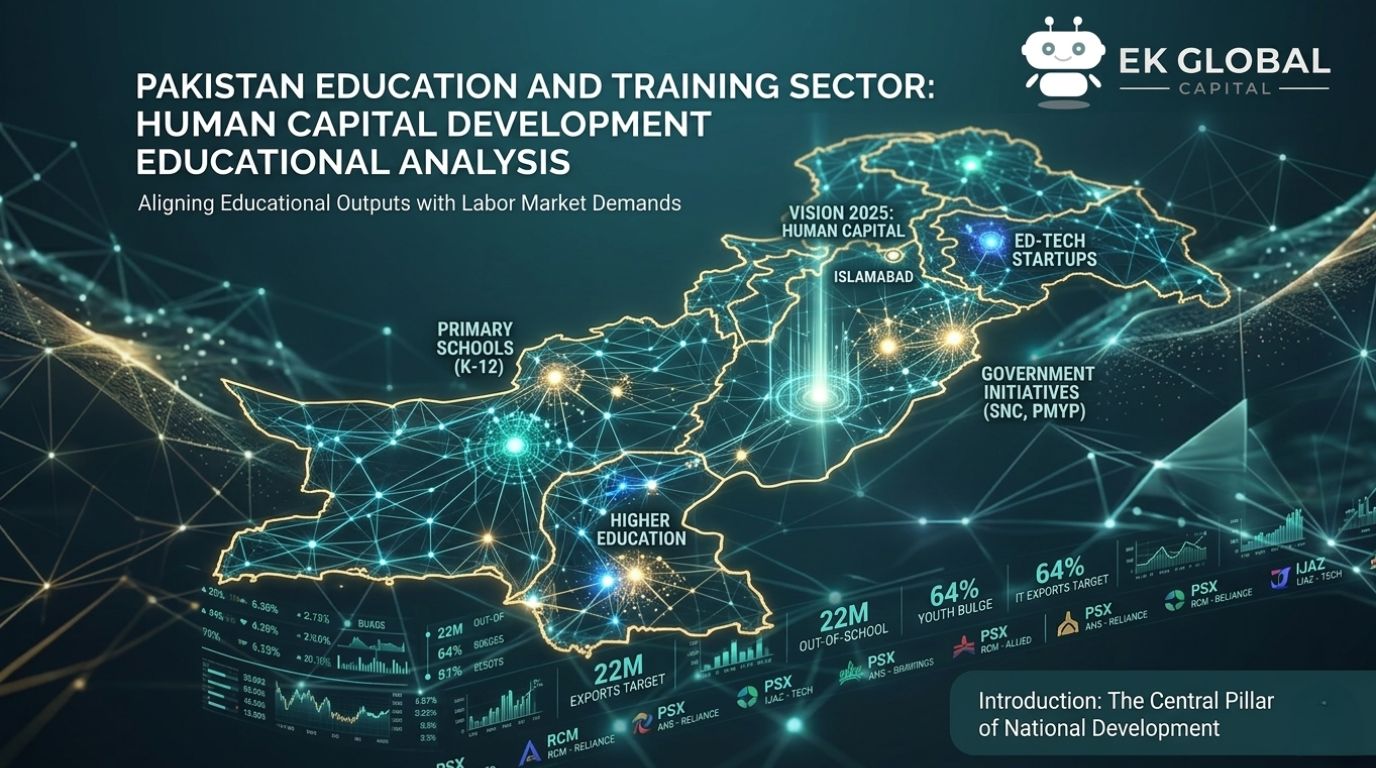
In the Islamic Republic of Pakistan, the education and training sector has long been viewed as a social welfare function—but that paradigm is shifting. Today, it is being re-engineered as a strategic economic engine. As Pakistan navigates the complexities of demographic transition, digital disruption, and global economic integration, the focus has turned decisively toward a knowledge-based economy. At the heart of t...
Introduction: The Central Pillar of National Development In the Islamic Republic of Pakistan, the education and training sector has long been viewed as a social welfare function—but that paradigm is shifting. Today, it is being re-engineered as a strategic economic engine. As Pakistan navigates the complexities of demographic transition, digital disruption, and global economic integration, the focus has turned decis...
This educational analysis provides a comprehensive guide to understanding the structure, policy drivers, market opportunities, and growth dynamics of Pakistan’s education and training sector. Designed for market researchers, investors, and policy analysts, this blog explores enrollment trends, the expanding role of the private sector, skill development priorities, and the specific linkages to listings on the Pakista...
The urgency is undeniable. With over 64% of Pakistan’s population under the age of 30, the nation faces a massive demographic dividend. However, this dividend can turn into a liability if not harvested through world-class education and targeted vocational training. According to UNESCO, Pakistan has one of the world’s highest out-of-school children populations (over 22 million). Failure to address this would stall ec...
Chapter 1: The Sector Landscape – Structure and Governance Understanding Pakistan’s education and training sector requires a clear map of its institutional architecture. Unlike many centralized systems, Pakistan’s education governance is a complex mix of federal, provincial, and private actors, shaped by the 18th Constitutional Amendment (2010), which devolved education to the provinces.
1.1 Key Regulatory Bodies and Stakeholders The sector is governed by multiple entities operating at federal and provincial levels: